
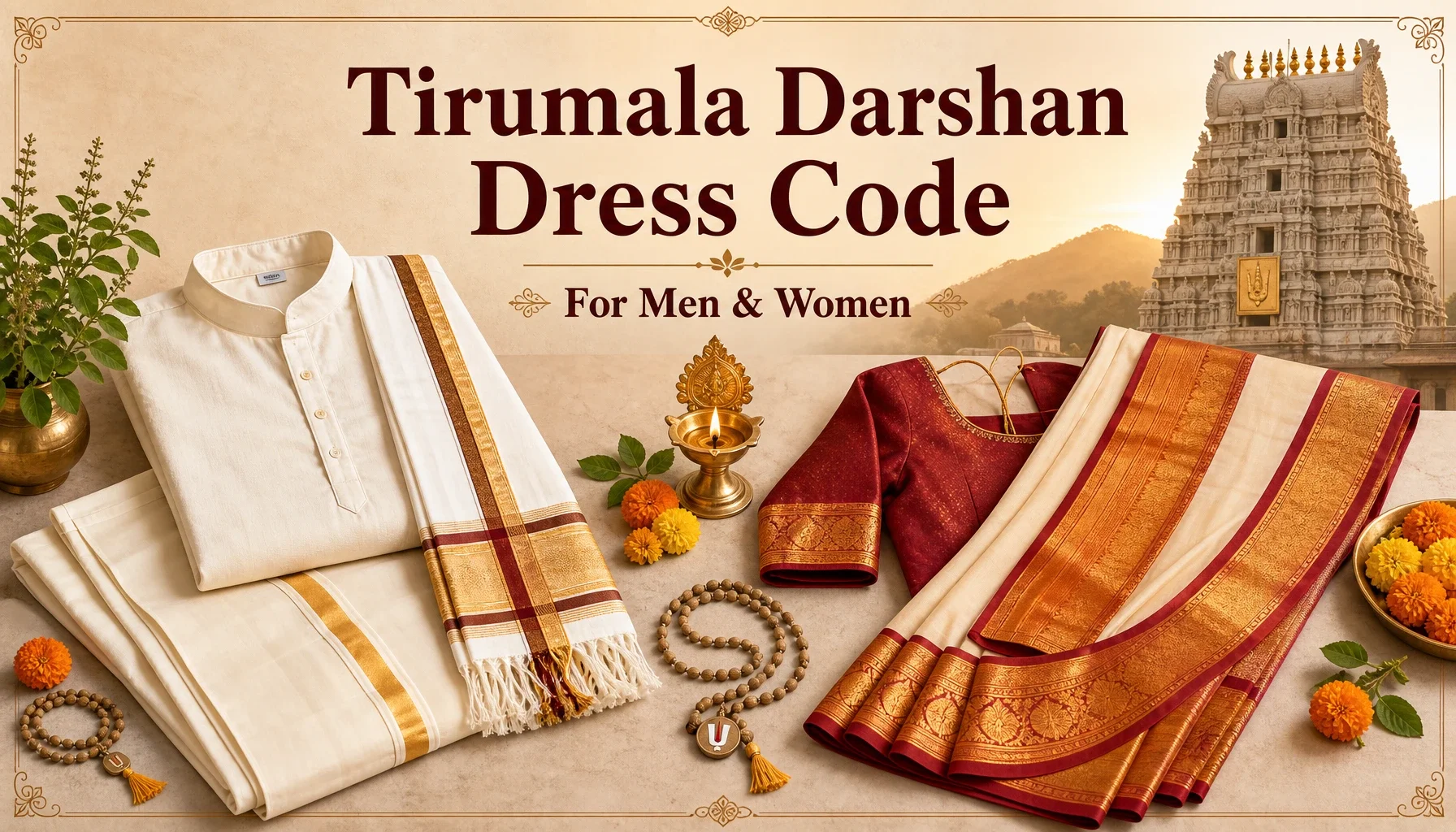
The Sri Venkateswara Swamy Temple at Tirumala is one of the most visited pilgrimage centres in the world, drawing lakhs of devotees every week. To preserve the sanctity and traditional spiritual atmosphere of the temple, the Tirumala Tirupati Devasthanams (TTD) enforces a traditional dress code for all devotees entering the temple premises. Wearing the right attire not only helps you avoid being stopped at the security check but also aligns with the devotional spirit of the kshetram.
Table of Contents
This guide covers exactly what men, women, and children should wear, what is not allowed, and practical tips to make your darshan smooth and hassle-free.
Why Tirumala Has a Dress Code
Tirumala is a traditional Hindu temple, and TTD expects devotees to dress in a manner that reflects modesty, cleanliness, and cultural respect. The dress code is applied at the Vaikuntam Queue Complex and other entry points, where security personnel may deny entry to anyone wearing inappropriate clothing. The rule applies equally to all pilgrims, regardless of the type of darshan ticket (free Sarva Darshan, Special Entry ₹300 darshan, or Arjitha Seva).
The core principle is simple: dress in traditional Indian attire that covers the body modestly.

Dress Code for Men
Men are expected to wear traditional Indian clothing. The recommended attire includes:
- Dhoti (pancha) with an upper cloth (angavastram), which is the most traditional and preferred attire
- Kurta with pyjama
- Shirt with trousers / formal pants
- Dhoti with a shirt or kurta
What Men Should Avoid
- Shorts, Bermudas, and three-fourth pants
- Half pants and lungis
- Sleeveless vests / banians worn as outerwear
- T-shirts with offensive prints or slogans
- Ripped or torn jeans
While plain trousers with a shirt are generally accepted, many devotees prefer to wear the traditional dhoti as a mark of devotion, especially when participating in sevas.
Dress Code for Women
Women are expected to dress in traditional, modest Indian attire. Acceptable clothing includes:
- Saree with blouse (the most traditional choice)
- Half-saree (langa voni) — common among young girls and women in South India
- Salwar kameez / Punjabi dress with dupatta
- Chudidar with a dupatta
What Women Should Avoid
- Jeans, leggings worn as pants, and Western casual wear
- Short skirts, mini dresses, and gowns
- Sleeveless or revealing tops
- Any outfit that does not cover the shoulders, midriff, and legs modestly
The general rule for women is that the attire should be full-length and modest, keeping the shoulders and legs covered.
Dress Code for Children
TTD is generally lenient with young children, and there is no strict enforcement of traditional wear for kids. However, dressing children in neat, clean, and modest clothing — and ideally traditional attire — is appreciated and keeps in line with the temple's spiritual environment.
Special Note for Sevas and Arjitha Seva Participants
If you are participating in Arjitha Sevas (paid sevas such as Suprabhatam, Thomala Seva, Archana, Kalyanotsavam, etc.), the traditional dress code is strictly enforced:
- Men: Dhoti and angavastram (upper cloth), often bare-chested with the angavastram as per tradition
- Women: Saree or half-saree (langa voni)
Western attire is generally not permitted for seva participants, so plan your clothing accordingly if you have booked any seva tickets.
How to Book a Room in Tirumala: Complete Accommodation Guide (TTD + Mutts, Online & Offline)
Footwear and Other Practical Guidelines
- Footwear is not allowed inside the temple. You must remove and deposit your footwear at the designated free footwear counters before entering the queue complex.
- Consider walking barefoot comfortably, as the pathways can get hot during the day.
- Mobile phones and electronic gadgets are not permitted inside the temple; deposit them at the cloakroom or leave them at your accommodation.
- Carry minimal belongings to speed up the security check.
Practical Tips for a Smooth Darshan
- Carry a spare set of traditional clothes if you are travelling directly and unsure whether your outfit meets the code.
- Dress comfortably — you may spend several hours in the queue complex, so choose breathable cotton fabrics, especially in the warmer months.
- Women can carry a shawl or dupatta to cover shoulders if needed.
- Men who wish to follow full tradition can buy an inexpensive dhoti and angavastram from shops near Tirumala.
Reach early and keep your dress code sorted beforehand to avoid last-minute rejections at the security check.
Frequently Asked Questions (FAQ)
Q1. Can I wear jeans and a T-shirt for Tirumala darshan? Plain trousers with a shirt are usually accepted for men, but jeans and casual Western wear are discouraged for women. It is safest to wear traditional Indian attire to avoid being stopped at security.
Q2. Is the dress code strictly enforced for general Sarva Darshan? The dress code applies to all darshan types. While enforcement can vary, it is best to follow traditional modest attire to ensure smooth entry.
Q3. What should women wear for Tirumala darshan? Saree, half-saree (langa voni), salwar kameez, or chudidar with a dupatta are all recommended and accepted.
Q4. What is the dress code for Arjitha Sevas? Sevas require strict traditional attire — dhoti and angavastram for men, and saree or half-saree for women.
Q5. Are shorts allowed for men? No. Shorts, Bermudas, half pants, and lungis are not allowed inside the temple.
Conclusion
Dressing appropriately for Tirumala darshan is an important part of respecting the temple's traditions and ensuring a smooth, uninterrupted visit to Lord Venkateswara. Men should ideally wear a dhoti with angavastram or a formal shirt and trousers, while women should opt for a saree, half-saree, or salwar kameez with a dupatta. Following these simple guidelines will help you focus on what truly matters — a peaceful and blessed darshan of Sri Venkateswara Swamy.
Om Namo Venkatesaya! 🙏
