
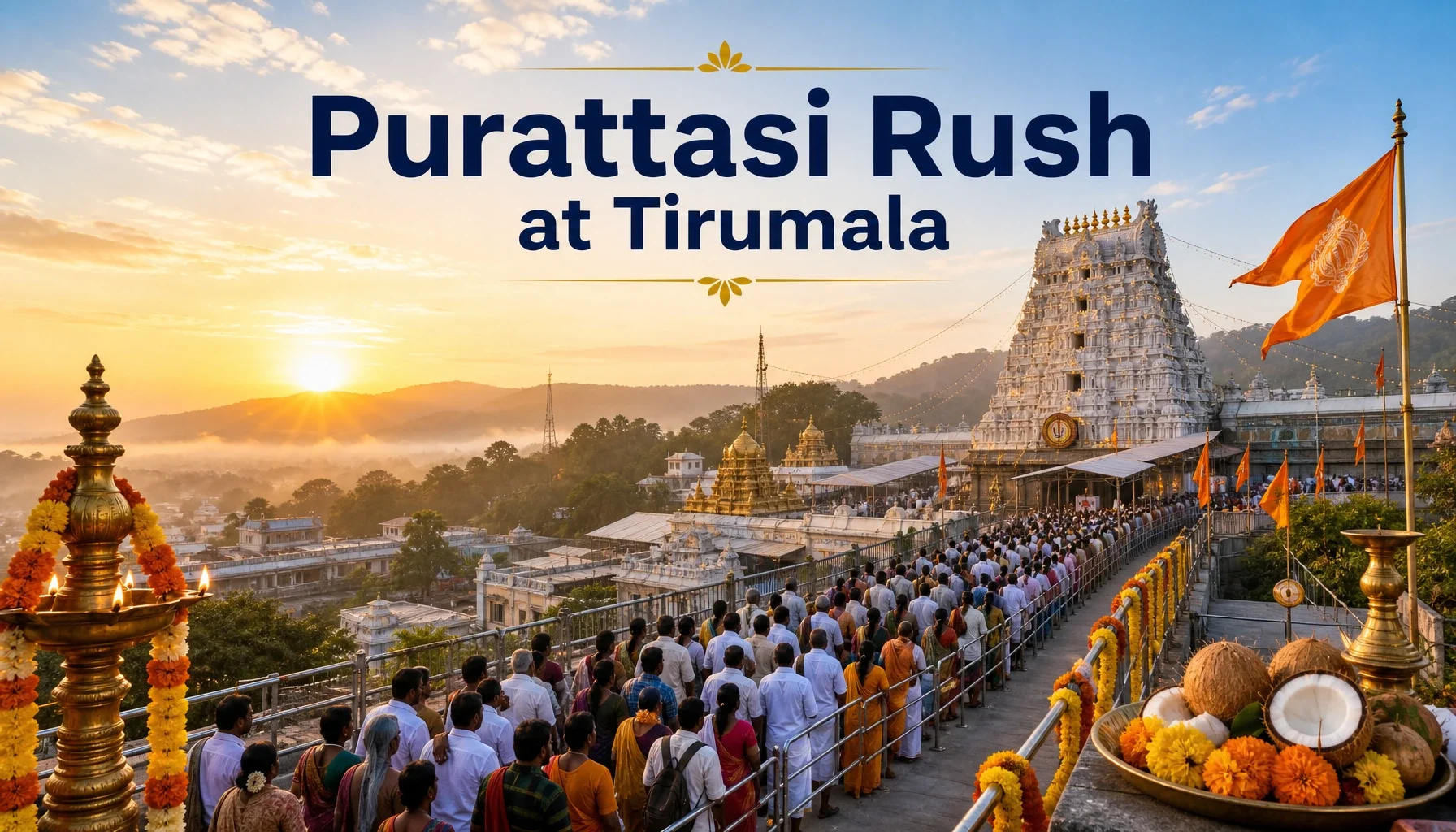
Every year, the Tamil month of Purattasi transforms Tirumala into one of the most crowded pilgrimage destinations in India. During these weeks, the queue lines swell, the seven hills echo with chants of "Govinda! Govinda!", and thousands of devotees—many wearing black or blue attire—climb the sacred hills on foot to have darshan of Lord Venkateswara. For those unfamiliar with the tradition, this sudden surge can seem overwhelming. But behind this massive gathering lies deep religious significance, centuries-old belief, and heartfelt devotion.
This article explains why Purattasi month is so special, when it begins, the meaning behind Govinda Mala, and why devotees walk long distances to reach Tirumala.
When Does Purattasi Month Begin?
Purattasi is the sixth month in the Tamil solar calendar. It typically begins in mid-September and ends in mid-October (around September 17 to October 17), though the exact dates shift slightly each year based on the sun's transit into the zodiac sign of Kanya (Virgo).
This month falls during the Hindu festive season, close to Navaratri and the onset of the sacred autumn period, which adds to its spiritual importance.
Why Is Purattasi So Sacred to Lord Venkateswara?
The single biggest reason for the heavy rush is the belief that Purattasi is the most beloved month of Lord Venkateswara (also known as Balaji, Srinivasa, or Govinda), the presiding deity of Tirumala.
Vaikunta Ekadasi 2026: Date, Timings, Significance and Darshan at Tirumala
Several beliefs contribute to this:
The month of Vishnu. Lord Venkateswara is a form of Lord Vishnu. Purattasi is considered especially dear to Vishnu, and worshipping him during this month is believed to bring immense blessings, prosperity, and relief from difficulties.
Every Saturday is special. The Saturdays of Purattasi—known as Purattasi Sanikizhamai—are the holiest days. Devotees believe that Lord Venkateswara descended to earth (in the Kali Yuga) and that Saturdays are particularly auspicious for worshipping him. On these Saturdays, temples dedicated to Venkateswara across Tamil Nadu, Andhra Pradesh, and beyond witness enormous crowds.
Fasting and vows. Many devotees observe fasting throughout Purattasi, abstaining from non-vegetarian food, alcohol, and certain habits. They dedicate the month to prayer, temple visits, and acts of devotion, culminating in a pilgrimage to Tirumala.
Because of these beliefs, families across South India—and increasingly from across the country—plan their Tirumala visit specifically during this month, creating the characteristic heavy rush.
A Complete Guide for International Tourists, Foreigners & NRIs in tirumala Temple
What Is Govinda Mala?
A striking feature of the Purattasi pilgrimage is the sight of thousands of devotees wearing a special mala (a garland or sacred bead necklace) and dressed in black, blue, or saffron clothing. This tradition is known as taking up the Govinda Mala (also called Venkateswara Mala or Balaji Mala).
Here is what it involves:

Taking a vow (Deeksha). A devotee formally begins the mala by wearing a tulsi or rudraksha-based garland, often after a ritual at a local temple. From that moment, they enter a period of strict discipline, usually lasting a fixed number of days (commonly 21, 40, or 48 days), leading up to their darshan at Tirumala.
Living a pure life. During the mala period, devotees follow strict rules: they eat only vegetarian food, bathe before prayers, sleep on the floor, avoid worldly pleasures, control anger, speak truthfully, and treat everyone as an embodiment of God. They often address each other as "Govinda," setting aside personal names and status.
Simple attire. The black or blue clothing symbolizes humility, detachment from ego, and surrender to the Lord. It also creates a visible sense of unity—rich and poor, young and old, all appear equal in the eyes of God.

Breaking the vow at Tirumala. The mala journey traditionally concludes with darshan at Tirumala, after which the devotee removes the garland, having fulfilled their spiritual commitment.
This tradition draws heavily from the same devotional culture seen in the Ayyappa (Sabarimala) pilgrimage, and for many families it is an annual ritual passed down through generations.
Why Do Devotees Walk Long Distances on Foot?
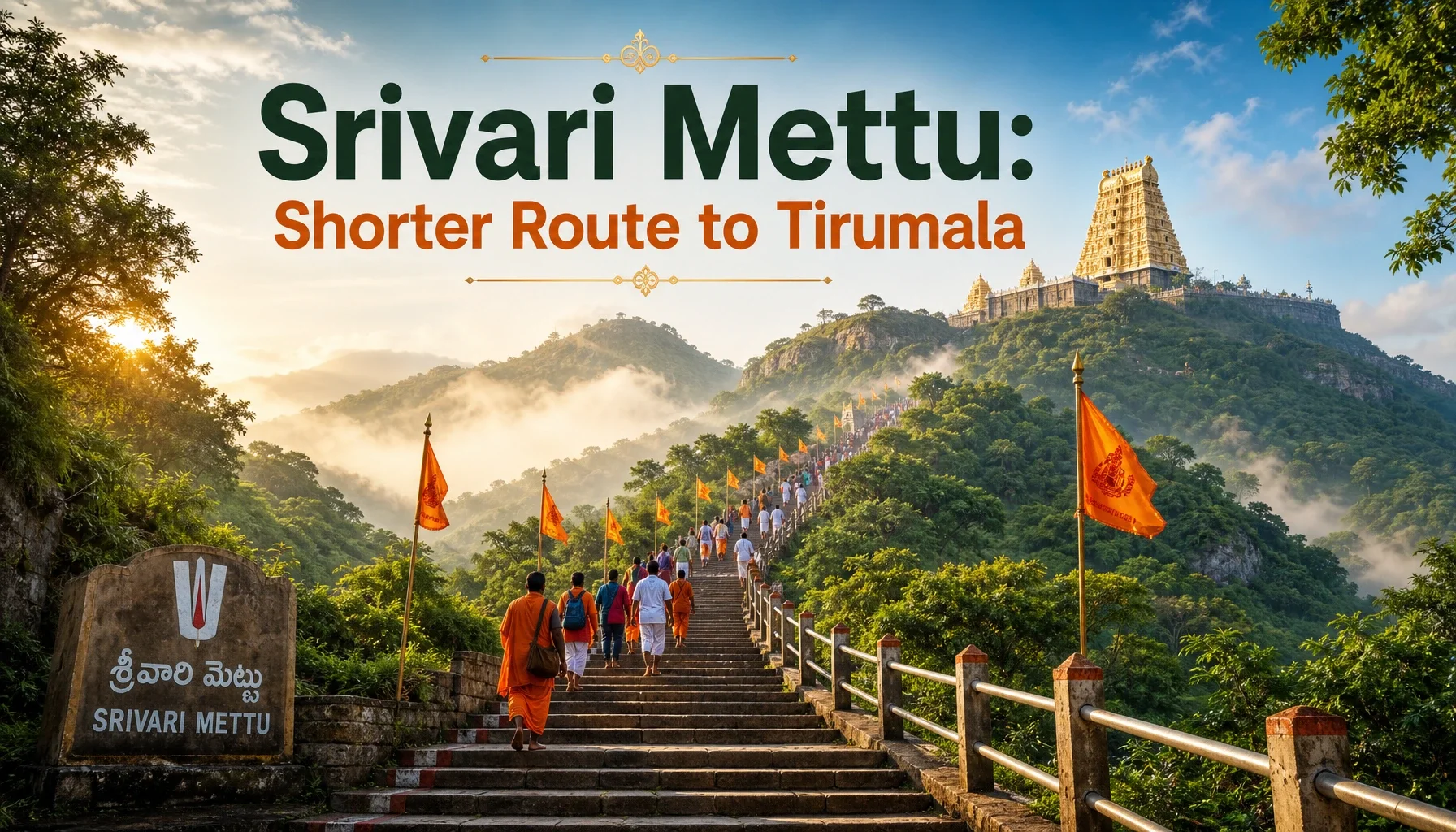
Perhaps the most moving sight during Purattasi is the endless stream of devotees climbing the Tirumala hills on foot instead of taking a bus or car. This walk, though physically demanding, is undertaken willingly and joyfully. Here's why:
The footpath is sacred. There are two traditional walking routes to Tirumala—the Alipiri Mettu (around 3,550 steps, about 9 km) and the Srivari Mettu (a shorter, steeper route of about 2,388 steps). Devotees believe that climbing these steps barefoot is itself an act of worship, with each step bringing them closer to the Lord.
Fulfilling a vow. Many devotees take a vow (mokku) that if their prayers are answered—for a child, a job, recovery from illness, marriage, or success—they will walk up the hills to thank the Lord. Purattasi becomes the chosen time to fulfil such promises.
Penance and devotion. Walking a long distance, sometimes covering many kilometres from their villages, is seen as a form of penance (prayaschitta) that purifies the mind and body. The hardship of the journey is considered a way of expressing sincere love and surrender.
The power of collective chanting. As devotees climb, they continuously chant "Govinda! Govinda!" and "Edukondalavada Venkataramana Govinda!" The collective sound energizes the crowd, dissolves fatigue, and creates an atmosphere charged with faith. Many describe reaching the top not with exhaustion but with overwhelming emotion.
Tradition and family legacy. For countless families, walking to Tirumala is a ritual repeated year after year. Grandparents, parents, and children walk together, passing on the tradition and strengthening their bond with the deity and with one another.
The Result: A Sea of Devotees
When you combine all these factors—the belief that Purattasi is Lord Venkateswara's favourite month, the sacred Saturdays, the Govinda Mala vows, and the tradition of walking on foot—the outcome is a massive convergence of pilgrims at Tirumala. The Tirumala Tirupati Devasthanams (TTD) often makes special arrangements during this period, including additional darshan queues, extended timings, and enhanced facilities to manage the extraordinary crowds.
Waiting times for Srivari darshan can extend to many hours, and the queue complexes, footpaths, and choultries remain packed day and night. Yet, despite the long waits and physical strain, devotees remain patient and joyful, believing that the harder the journey, the greater the blessing.
Tirumala Angapradakshinam Seva : Online Booking, Release Date, Timings & Complete Procedure
Conclusion
Purattasi month is far more than a date on the calendar for devotees of Lord Venkateswara—it is a season of intense devotion, discipline, and surrender. The heavy rush at Tirumala during this month is a reflection of unwavering faith: faith that draws people to wear the Govinda Mala, to fast and pray, and to walk long distances up the sacred seven hills with the Lord's name on their lips.
For those planning to visit Tirumala during Purattasi, it is wise to expect large crowds, plan accommodation and darshan in advance, and above all, embrace the spirit of patience and devotion that defines this remarkable pilgrimage season.
Govinda! Govinda!
